
DISCOVERY
THE WRITE TRACK
CREATIVITY
Days on the Rails
65/180
Museums Visited
21
Art Galleries Visited
18
Countries Visited
11
Cities Explored
49
"We convince ourselves we are trapped because we are waiting for a perfect, sanitized escape route — a cured mind, a massive financial cushion, or a pristine plan. But absolute freedom doesn't look like a five-star reservation; it looks like wreckage. You are only truly trapped if you demand total certainty before you take the first step."
The Write Track
A 180 Day Challenge
For myself, I have spent years running away from friction, trying to engineer a safe, carefully sanitized existence. Along the way, I made catastrophic mistakes. I hesitated when I should have moved. I let countless, irreplaceable life opportunities slip right through my fingers because I was frozen by the fear of making the wrong choice.
Worse than the missed opportunities, I trusted the wrong people. I opened my life up to people who specialized in emotional manipulation and psychological abuse. It is a toxic, draining dynamic that didn't just happen in my past — it is an anchor I am still actively fighting to untangle myself from right now, even as I type these words. I have finally awoken to the fact "lies unchallenged, become the truth." The Write Track is where I choose to begin the challenge.
My internal world didn't just stall; it suffered a violent, silent structural collapse. To find myself completely fractured before I even step onto the platform feels deeply humiliating. It feels like a very public breakdown of the engine while you, the passengers, are already standing out here on the concrete holding your tickets. But I promised myself that I would bypass the automated, curated lies of modern media. If I am going to be uncompromisingly honest with you from the very first kilometer, I have to let you see the actual wreckage right now.
This is my pre-trip reckoning. I am 65 years old. When I look at the clinical ledger of my life, the math does not lie: I have failed at almost everything modern society tells you to win at. I do not have a pristine corporate resume, a massive savings account, a cured mind, or a clean manuscript. The structures I built around myself have run completely off the tracks.
But do not mistake a disrupted life for a broken man.
We live in a world completely obsessed with youthful perfection, overnight success, and hyper-optimized achievements. I am here to embody the exact opposite. I want to show you that it is never too late to pull the emergency brake on a life that is destroying you. It is never too late to change, to learn, and to grow. I stand before you with zero answers. I will never sell you a five-step roadmap to a perfect life. What I have instead is a vast, archival library of hard-earned questions and a lifetime of psychological traps to watch out for.
Despite the wreckage, my creative spirit remains sharp, and I am embracing a new, internal sovereignty I call Cedent-Power™ — yielding to the chaos to find strength. My upcoming, low-budget journey across 33 borders serves as the ultimate test of this new, honest approach. I am taking only a notebook, a laptop, and a commitment to transparency, replacing the silence with action. The train is leaving the station, and I hope you will join me on this journey.
I am no longer suppressing the damage, hiding the bruises on my psyche, and letting toxic people dictate my worth. The psychological cage I built is open, and I am now on The Write Track.
The Podcast
A solo audio series recorded live from wherever the train stops: the same raw, unscripted honesty as everything else here. First episode: The Architecture of Tactical Surrender.
The cracks in the postcard
Modern Europe has been neatly packaged into a copycat, mass-produced aesthetic, a sanitized postcard optimized strictly for clicks and commercial data mining. I choose to look for the cracks in that facade.
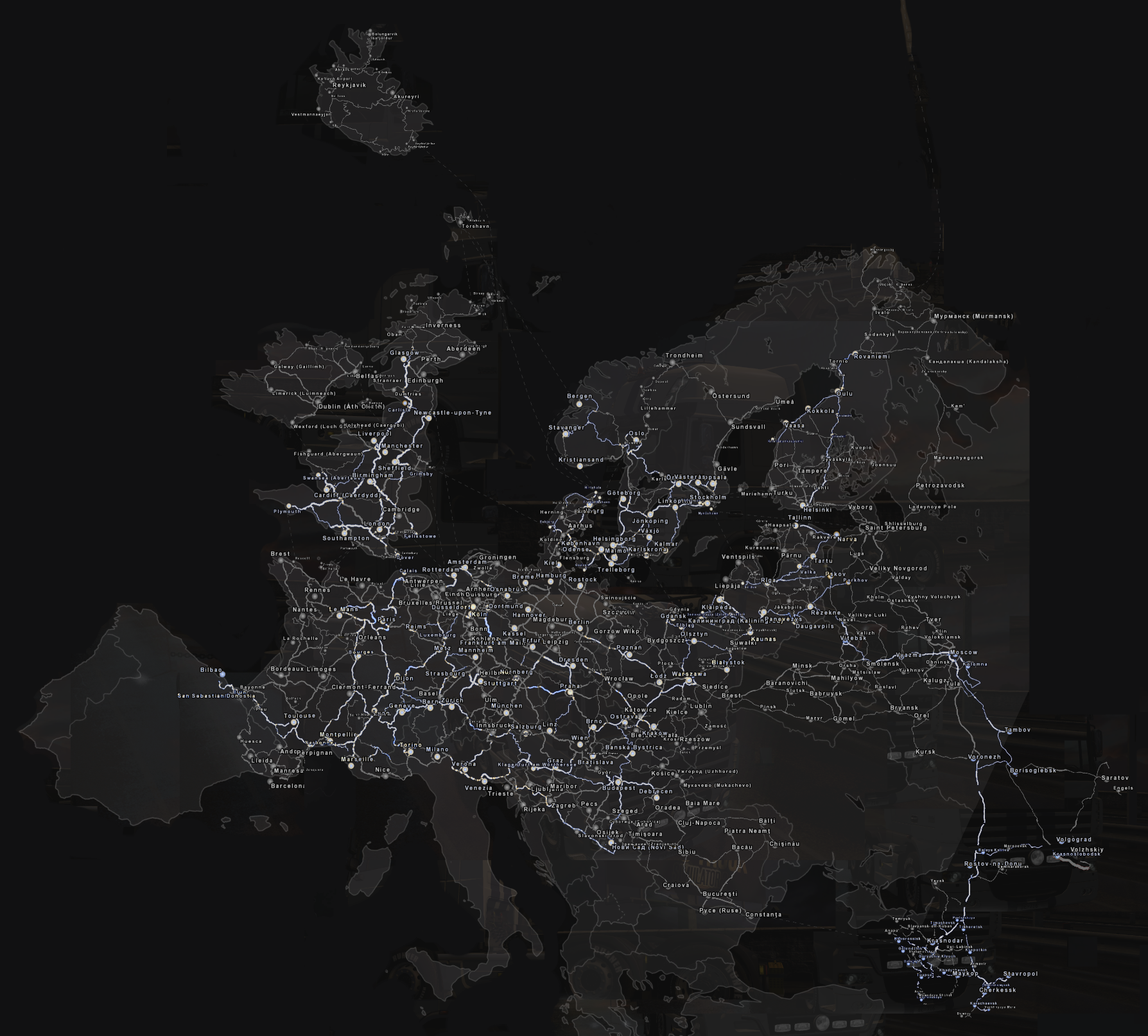
Armed with nothing but an Interrail pass, a zero budget, and a refusal to book a single room in advance, I am tracking the real, unvarnished identity of a continent across 33 borders. The two psychological novels below are born directly from this volatile, unfiltered journey.
To survive the sheer friction of this 180-day independent migration, I have had to completely restructure how I process uncertainty. The tracks of Europe are my live field-test; by tactically surrendering to the chaos of the road, I protect my finite cognitive bandwidth to fuel my choices and my pen.
Central & Eastern Europe
The Focus: Striking out from the literary cafés of Paris and moving swiftly through the industrial, raw galleries of Belgium. From there, cutting straight across into Germany's deep forest tracks to anchor the month on the isolated, wind-swept coastlines of Denmark.
The Italian Peninsula & Adriatic Coast
The Focus: A complete shift toward Mediterranean light. Tracking the intense, sun-baked colors and classical ruins across Greece, crossing the water to Sicily, and tracing the southern edge of Italy. The month culminates in the deep, solemn coastal paths along the Adriatic.
Central Europe & The Balkans
The Focus: Moving inland to uncover the psychological shadows of Prague and Budapest. The journey then pushes southward into the raw, jagged, and mountainous tracks of the Balkans, exploring the complex, layered histories written into the landscape.
Western Europe & Nordics
The Focus: Heading north as winter sets in and moving down through the stark, minimalist architecture of Sweden into the deep, solemn histories of Estonia and Poland, matching the cold-weather focus with heavy stone, local libraries, and borderland narratives.
Mediterranean & Southern Europe
The Focus: Spending the darkest winter months digging into Renaissance art philosophy. The route anchors in the grand, historic libraries and galleries of Florence and Rome, finding warmth in classical philosophy, sacred art, and Mediterranean sanctuary.
The Iberian Finish & North Atlantic Coast
The Focus: The final, grueling stretch through the sweeping, arid landscapes of Spain. The expedition ends on the dramatic, punishing cliffs of the Portuguese Atlantic coast, matching the raw, edge-of-the-world terrain with the conclusion of the journey.
Board the
Train
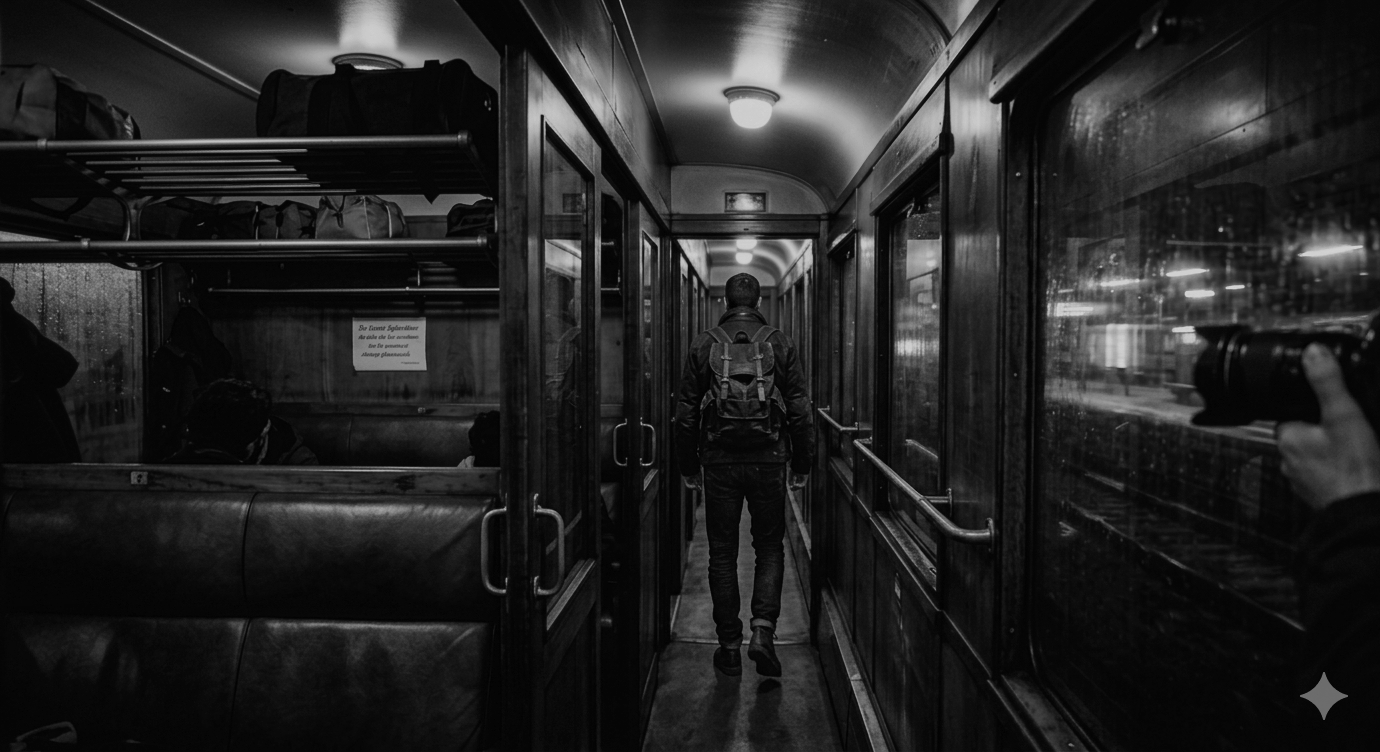
On 21 July 2026, I board a train to write and edit my novel "The Still Point" in motion across 180 days.
Sign up today to get Chapter 1 completely free and receive access to the live tracker updates as they happen.